History of the Tigers in US Military(I think you'll find Wild Bill's character fits the bill)
THE CIVIL WARAttachment:
 Louisiana Tigers.jpg [ 181.06 KiB | Viewed 1416 times ]
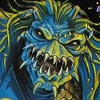
The most famous Louisiana unit from the Civil War, this battalion took the nickname "Louisiana Tigers" from its Company B. Its reputation led in time to the nickname being applied to all the Louisiana units in Virginia. Though generally represented as being completely outfitted in Zouave uniforms, the battalion had only one such company-the Tiger Rifles. The battalion began organizing at Camp Walker in New Orleans. It moved to Camp Moore and completed its organization on June 6, 1861, with five companies and 416 men. Ordered to Virginia, the battalion became the first Louisiana unit to be engaged in the war, when it fought a skirmish at Seneca Falls on the Potomac River on June 28. The men played an important role in the Battle of First Manassas, July 21, by helping to hold back the Union flank attack until more troops could come up and form a defensive line. In battle, 8 of the battalion's men were killed, 38 were wounded, and 2 were missing. The battalion was assigned to General Richard Taylor's Louisiana brigade along with the 6th, 7th, 8th, and 9th Louisiana regiments later in the month. That winter, the men drilled and did picket duty. They sometimes fought with other Confederate units and among themselves. One of the internal fracases led to the December 9 execution by firing squad of two men of Company B, the first men executed in the Army of Northern Virginia. Taylor's brigade joined General Stonewall Jackson's army in the Shenandoah Valley in May, 1862. The battalion played the major role in the capture of Front Royal, May 23. On May 25, the battalion was detached on the left flank of the army and saw no fighting in the Battle of Winchester. The brigade distinguished itself again in the Battle of Port Republic, June 9. Rejoining the Army of Northern Virginia near Richmond, the brigade participated in the Battle of Gaine's Mill, June 27. In that fight, Major Wheat and 5 other men were killed and 16 men were wounded. The battalion was so reduced in strength by the end of the Seven Days' Campaign, and the men were so hard to control following Wheat's death, that it was recommended that the battalion be disbanded. This occured on August 15. During the war, 39 men of the battalion were killed, 15 died of disease, 2 were executed, and 1 died in an accident.
WORLD WAR IIAttachment:
 Flying_tigers_decal.png [ 38.45 KiB | Viewed 1417 times ]
Attachment:
 FlyingTigerFormation.jpg [ 47.09 KiB | Viewed 1567 times ]
Chanault's Flying TigersWithin weeks of the Japanese attack on Pearl Harbor, the daring exploits of the American Volunteer Group (AVG) captured the attention of the world. The Chinese called them Fei Hu, for the shark's teeth painted on their planes. The world knew them as the legendary Flying Tigers.
Commanded by Clare Chenault of Louisiana, the Flying Tigers were a bunch of hard-drinking airmen who became known as some of the bravest pilots to fly during World War II. In 1937, Chenault, a retired U.S. Army captain, was hired as an advisor to the fledgling Chinese Air Force. He began to lay the groundwork for the American Volunteer Group by having runways built and ordering planes from U.S. manufacturer Curtiss-Wright.
The first contingent of American Volunteer Group pilots left San Francisco on July 10, 1941, aboard the Dutch ship Jaegersfontaine. Just before leaving, Chennault received confirmation of Presidential approval for the second American Volunteer Group of bombers with a schedule of 100 pilots and 181 gunners and radio men to arrive in China by November, 1941, and an equal number to follow in January, 1942.
Upon returning to the Orient in the summer of 1941, Chennault arranged with the British for the use of the Royal Air Force Keydaw airdrome at Toungoo, Burma. Arrangements were made by the Chinese with the British for the assembly and test flying by the A.V.G. of its P-40's. The A.V.G. P-40's were assembled at Rangoon, and all radios, oxygen equipment, and armament were installed by A.V.G. group mechanics at Toungoo.
At Toungoo the volunteer pilots were trained by Chenault, who had taught school in rural Louisiana. The airmen received seventy-two hours of lectures in addition to sixty hours of specialized flying.
The Third A.V.G. squadron moved to Rangoon on December 12, 1941, to join the R.A.F. in the defense of Rangoon. The First and Second squadrons flew from Toungoo to Kunming on the afternoon of the 18th. The first combat for the A.V.G. occurred over southern Yunnan Province on December 20, 1941. In their first combat, a combination of the First and Second Squadrons, shot down nine out of ten Japanese bombers with a loss of one A.V.G. aircraft. The second engagement brought the Third Squadron onto action over Rangoon on December 23, with the R.A.F. flying beside the Tigers. The total damage for the japanese was six bombers and four fighters. The R.A.F. lost five planes and pilots and the A.V.G. lost four planes and two pilots. Overall, the Flying Tigers were undefeated against the Japanese Air Force in more than 50 air battles.
After the American Volunteer Group was disbanded on July 4, 1942, the China Air Task Force of the United States Army Air Forces, commanded by General Chennault, officially took over air operations in China. In early March, 1943, the 14th Air Force was activated under the command of Chennault and replaced the China Air Task Force. Chennault remained in command of the 14th Air Force until the end of July, 1945. General Chennault formally retired from the military for the second time in October, 1945.











 .
.